Our History
Honoring the Past While Serving Today’s Community.
For nearly five decades, the Claymont Community Center has served as a welcoming place for neighbors of all ages to learn, connect, and grow. Located in the former Claymont High School building, the Center is rooted in a powerful history of education, resilience, and community transformation. Today, we proudly carry forward that legacy by offering programs and resources that strengthen families and uplift the community.
To schedule a tour of our Brown Gallery, please call our front desk!
A Building With a Story
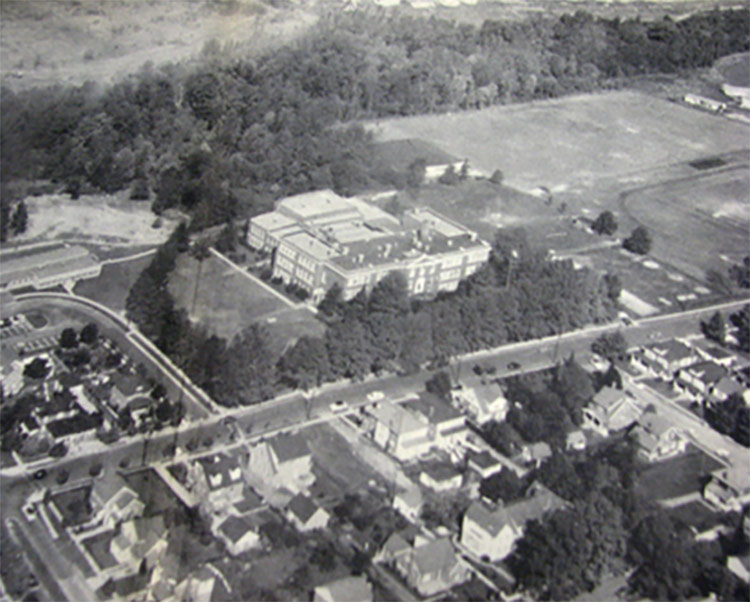
Claymont High School opened its doors in the early 20th century to serve the rapidly growing Claymont community. Through multiple expansions and renovations over the decades, the school became a central gathering place for local families, a place where students learned, friendships formed, and community life flourished.
As educational structures and district boundaries evolved, the high school eventually closed. In 1975, the site took on a new purpose with the founding of the Claymont Community Center. What had once been classrooms and hallways transformed into programs, services, learning spaces, and shared community rooms, all designed to meet the needs of residents of every age.
Over time, the Center expanded its services, welcomed new partners, and added programs supporting seniors, youth, families, adults seeking education, and individuals in recovery. Though its purpose changed, the building’s history remains an important part of its identity, a reminder that learning, growth, and opportunity are woven into its walls.


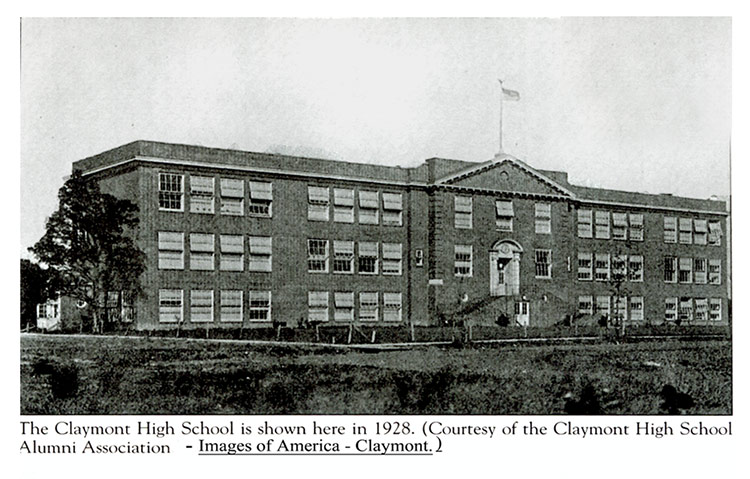



Claymont’s Place in Brown v. Board of Education
Claymont High School played a significant role in Delaware’s chapter of the national push for school desegregation. The building, its students, and its educators were part of a moment that helped shape one of the most important Supreme Court decisions in American history.
In the early 1950s, twelve African American students, later known as The Claymont Twelve, sought admission to Claymont High School. Their challenge became one of the Delaware cases folded into the landmark Brown v. Board of Education decision, which ultimately ended legal school segregation in the United States.
Educator Pauline Dyson, whose experiences are preserved in the center archives, offered meaningful testimony about the inequalities faced by Black students. Her words, along with the courage of the Claymont Twelve, helped illuminate the need for meaningful change.
A handwritten quote preserved from a Claymont classroom blackboard captures the urgency and moral clarity of the moment.
Today, the Center’s Brown Gallery serves as a reflective space honoring this history through photos, documents, and displays.


Historic Works Progress Administration (WPA) Murals
Inside the Center’s conference room are murals painted between 1937 and 1939 as part of the Works Progress Administration (WPA). Created by artist Walter Pyle Jr., the murals depict Claymont’s history, industry, and natural landscapes. Over the decades, the Masonite panels suffered from wear, graffiti, and attempted cleanings that caused further damage.
From 2012 to 2014, a major restoration effort took place in partnership with Winterthur Museum and the University of Delaware. Fourteen students and eight faculty members contributed more than 1,500 hours of conservation work to stabilize, clean, and restore the murals. Thanks to this effort, these historic works have been preserved and remain on display for the public to enjoy.


